Temple Borders
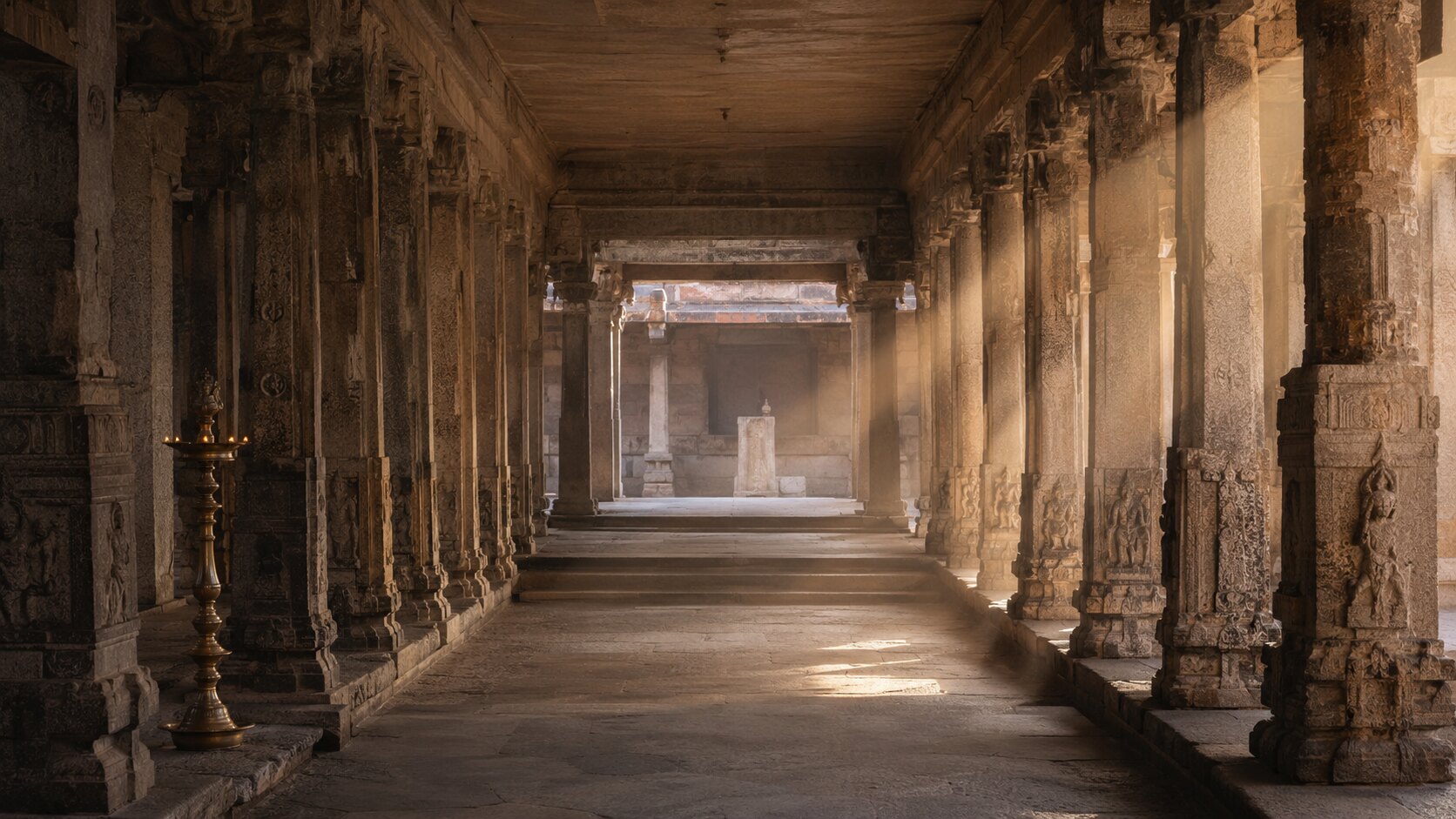
Stepped forms and rhythmic edges recall the geometry and silhouette of South Indian temple architecture.
Heritage
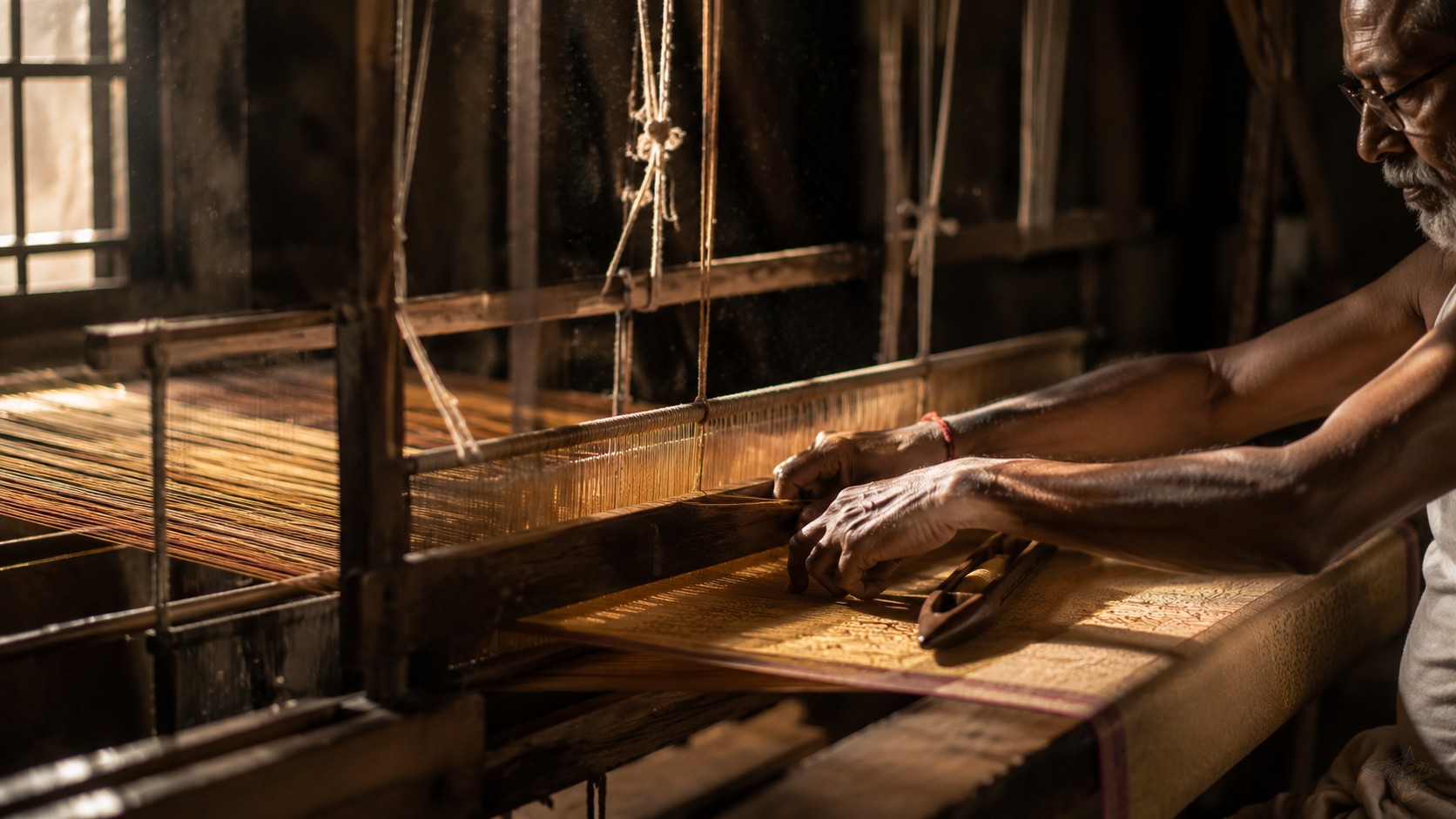
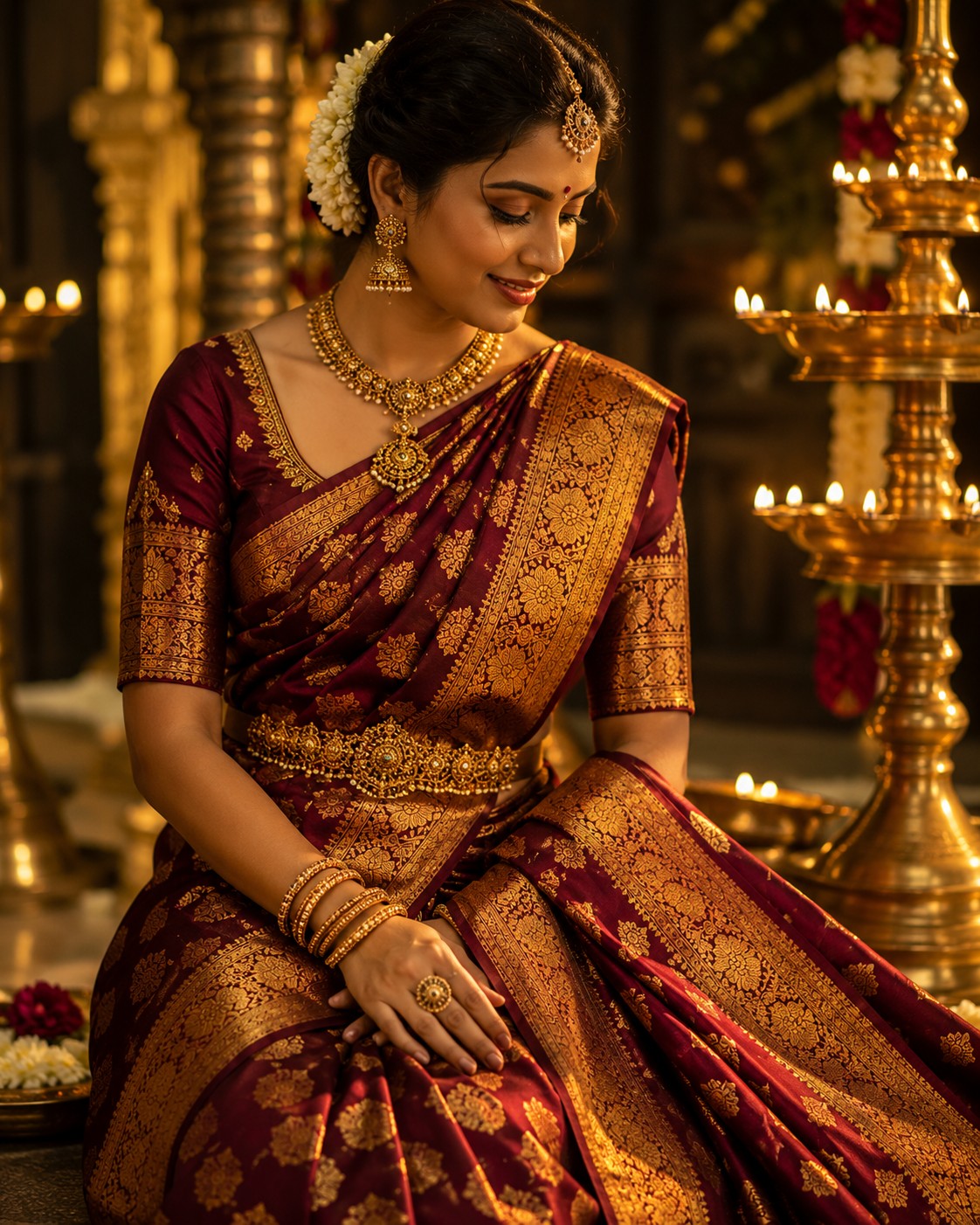
For generations, Kanchipuram silk has been woven with extraordinary care, artistry, and devotion. Every saree reflects a tradition that continues to inspire celebrations, memories, and family heirlooms.
The Legacy of Kanchipuram
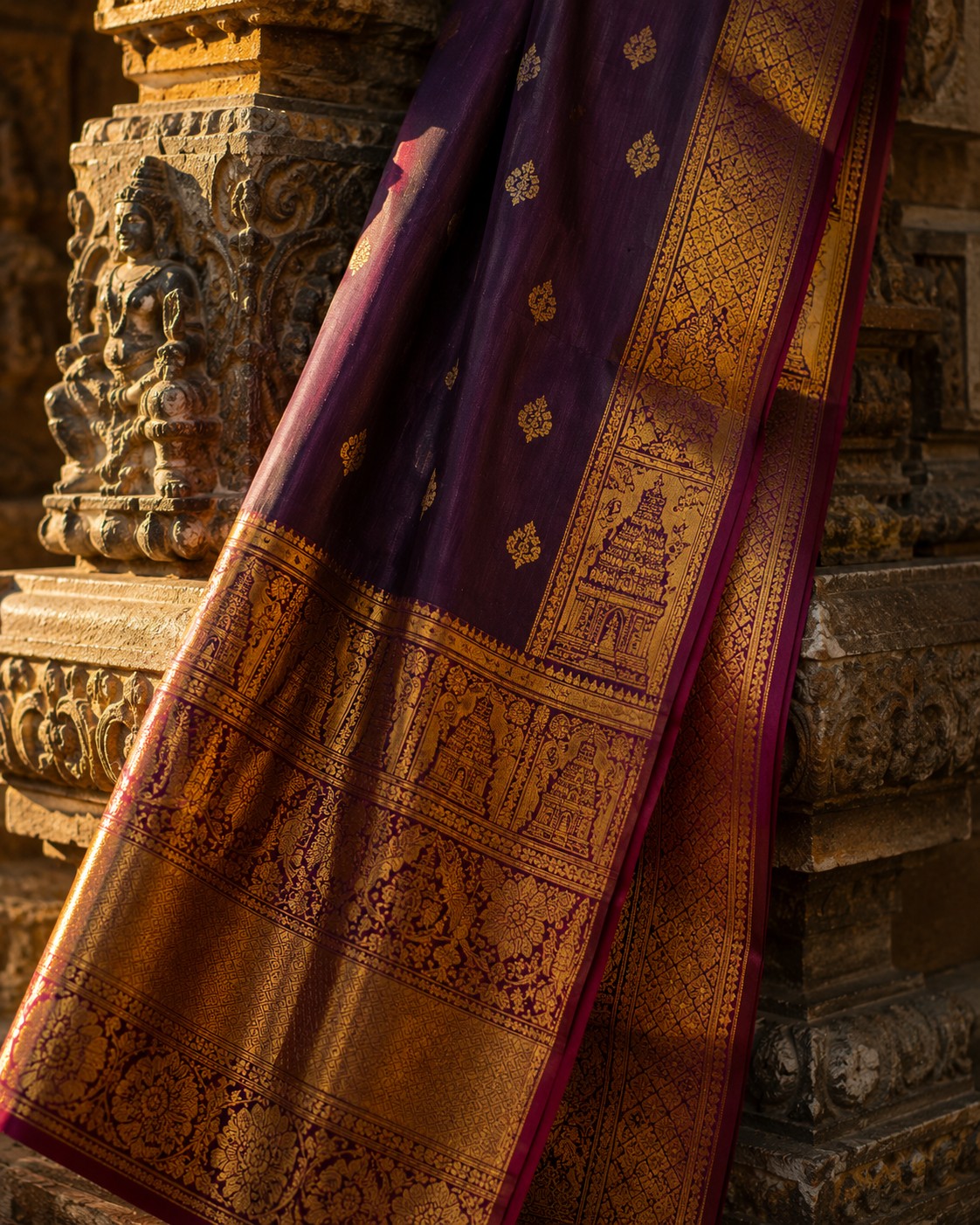
In Kanchipuram, silk weaving belongs to the rhythm of everyday life and to the most cherished occasions that shape it.
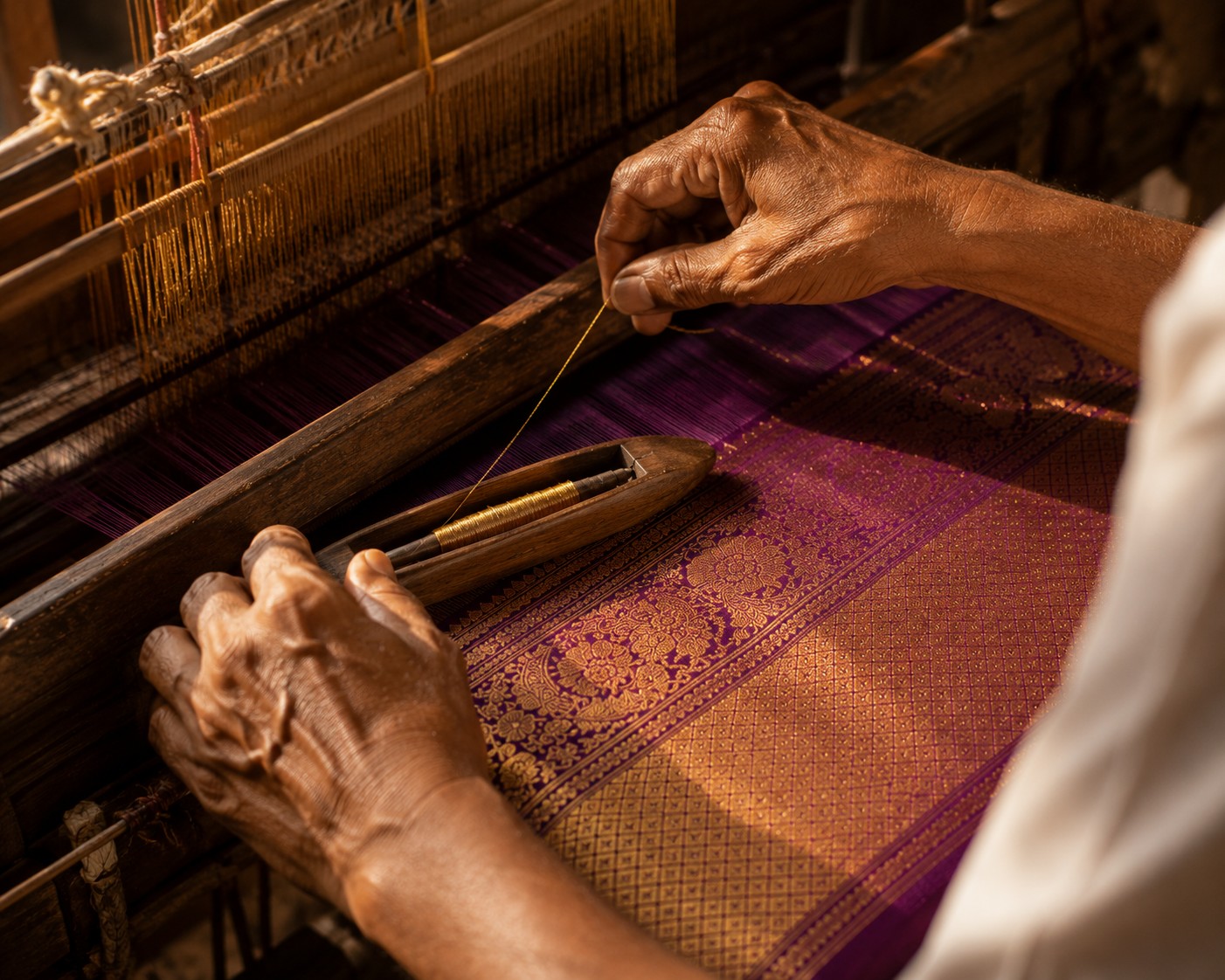
Knowledge passes quietly through generations—in the practiced movement of hands, the balance of colour, and the patient making of borders and motifs. The resulting saree carries more than beauty: it holds a sense of place, ceremony, and continuity. Familiar forms are continually reinterpreted through the weaver’s eye, keeping the craft expressive while honouring what came before.
At weddings, festivals, and family celebrations, Kanchipuram silk has long offered a language for marking the moment. Its luminous colour and sculptural richness make the wearer feel both grounded in tradition and entirely present. Even after the occasion, the saree continues its life—carefully folded, remembered, and often shared across generations. It remains treasured today because it never feels fleeting. Each drape brings craft and celebration together, allowing a living tradition to be worn, loved, and renewed.
Understanding Silk
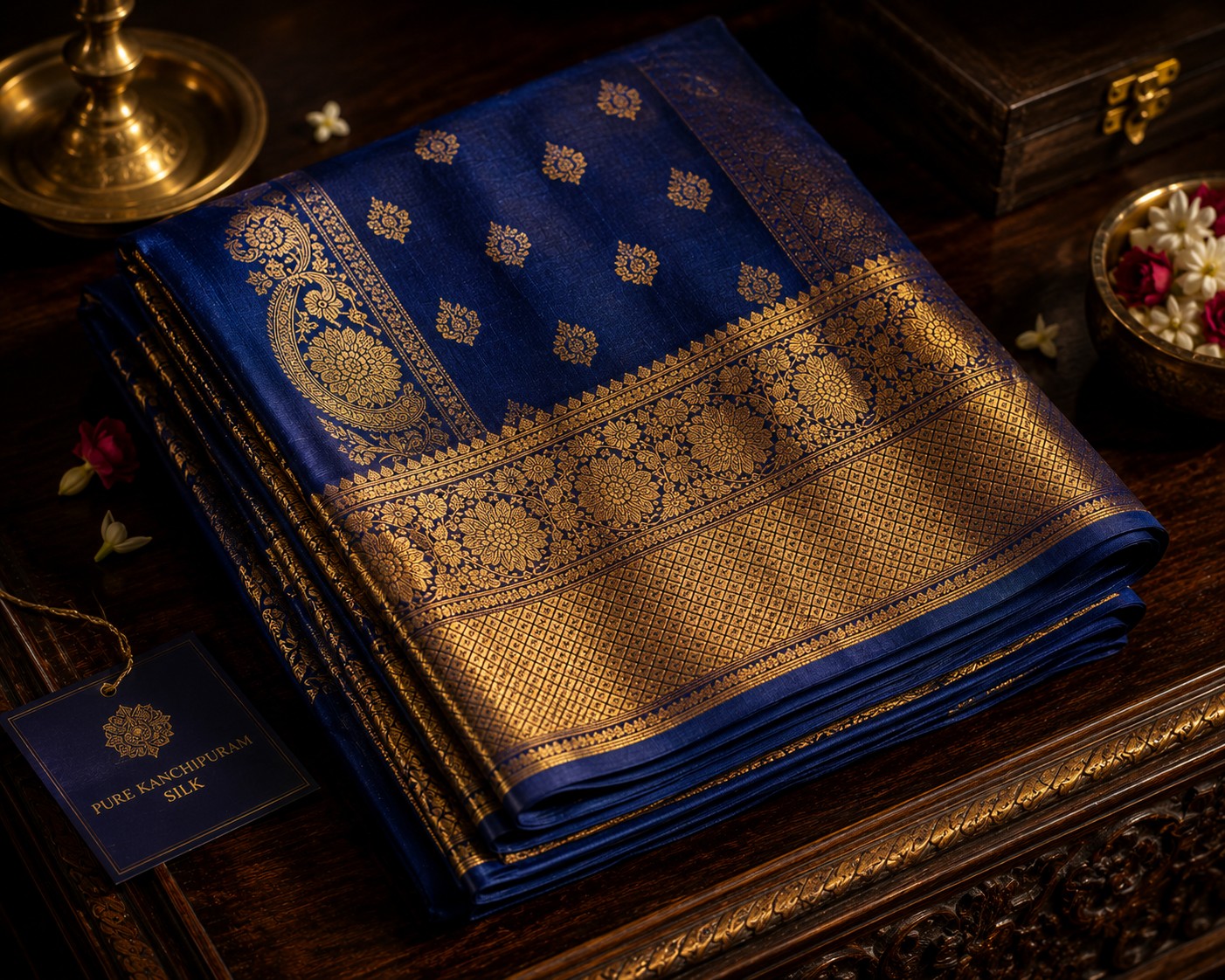
Silk is valued for its natural sheen, affinity for rich color, and graceful response to movement. The weight, texture, firmness, and luster of a saree can vary with the silk, weave, finishing, and individual construction of the piece.
The character of silk is never entirely uniform. Variations in yarn, weave, weight, and finishing give individual sarees their own movement, texture, and presence.
The Art of Zari
Zari can bring contrast and luminosity to borders, pallus, and motifs. Its visual effect depends on the design, density, placement, finish, and composition of the metallic thread used in the individual saree.
Zari is not a single expression. Its materials, finish, density, and visual character can vary, from quiet lines of light to richly patterned ceremonial fields.
A Weaving Overview
A glimpse of the stages commonly associated with bringing prepared silk from color and loom to a finished saree.
An Enduring Art
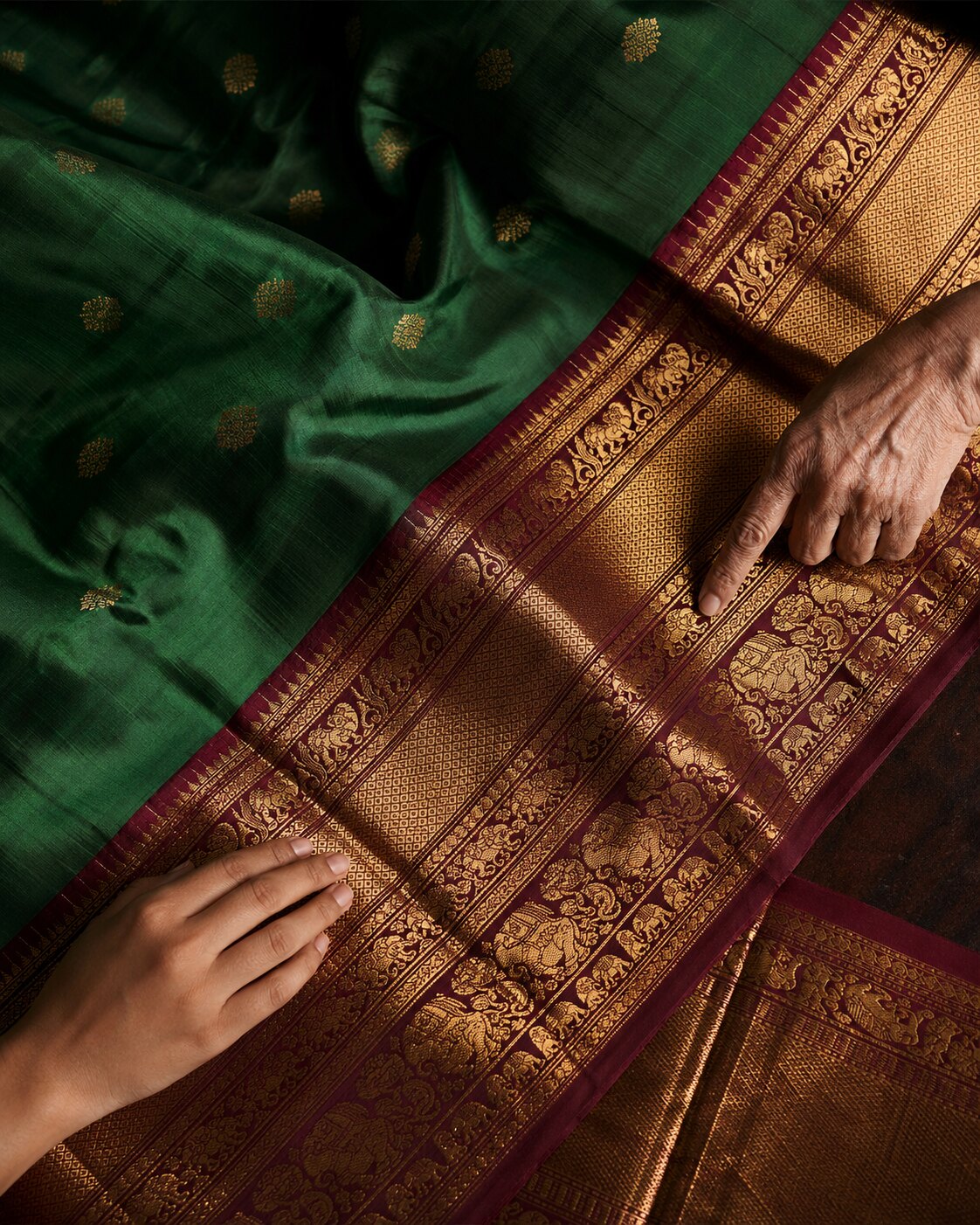
Kanchipuram weaving is recognized not only for richness, but for composition: the dialogue between body, border, and pallu; the confidence of contrast; and the discipline of motifs built thread by thread.
Within this visual language, no two expressions need feel the same. Scale, rhythm, color, and detail allow inherited forms to be renewed while remaining connected to place and tradition.
A Visual Language
Stepped forms and rhythmic edges recall the geometry and silhouette of South Indian temple architecture.
Ordered lines create balance across the body of the saree, bringing structure to luminous color.
Flowers, leaves, birds, and other familiar forms are interpreted through the disciplined language of the weave.
Jewel tones and resonant contrasts give the saree presence in weddings, festivals, and family observances.
Discover the color, artistry, and ceremonial presence of Kanchipuram silk.
Explore the Collections