
We may forget the decorations in a wedding hall. We may forget which songs played during a celebration or what was served at a festival meal. But we often remember the saree.
The deep maroon silk our mother wore to a family wedding. The green border that flashed as our grandmother walked through the house. The first Kanchipuram saree chosen especially for us—and the mixture of pride and nervousness we felt while learning to drape it.
A saree can hold these moments quietly for years.
The Sarees in Our Mothers’ Cupboards
For many of us, our earliest memories of silk begin not in a store, but in a cupboard at home.
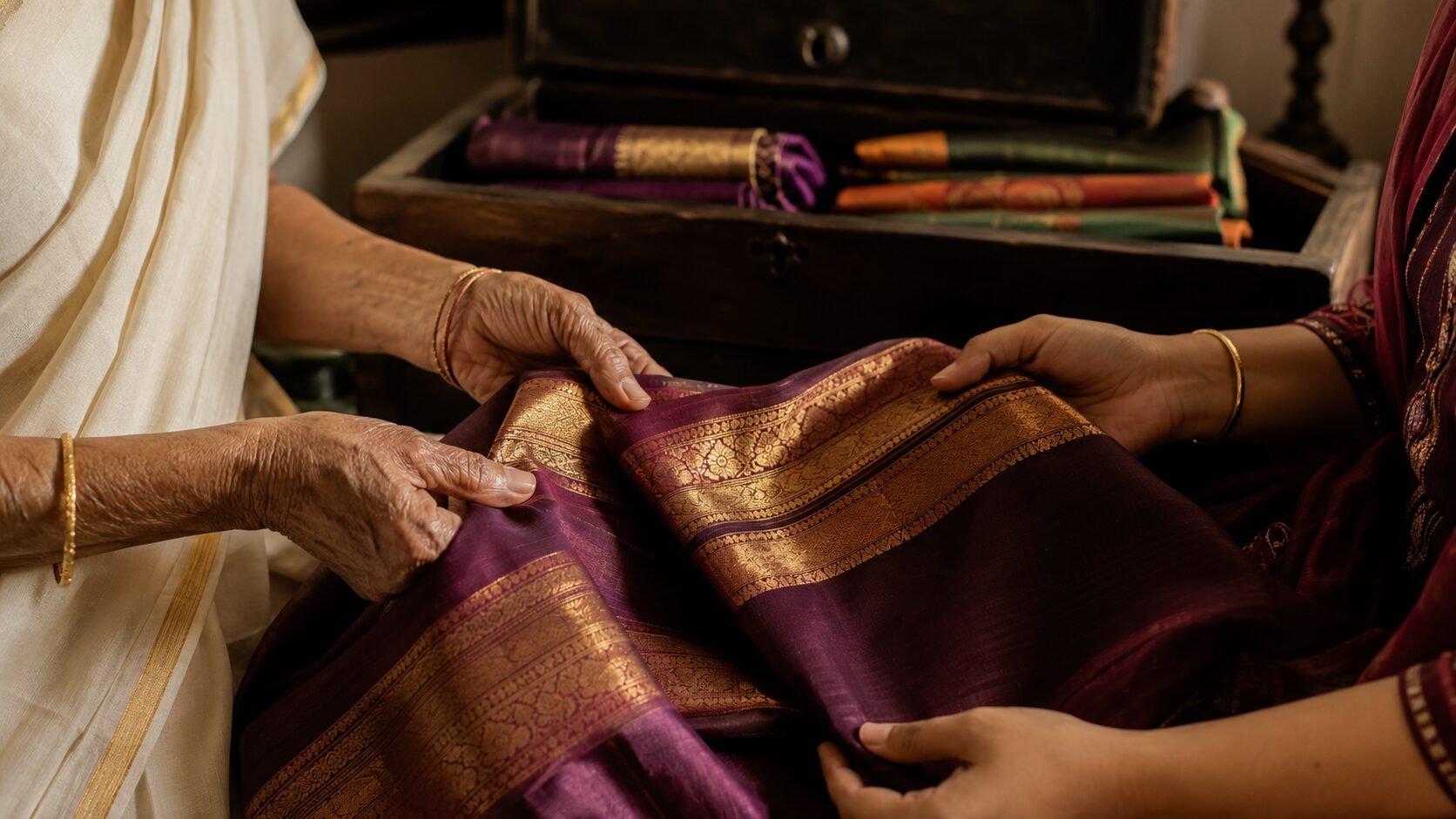
Sarees rested in careful folds, sometimes wrapped in soft cotton and carrying the faint fragrance of sandalwood, jasmine or the home in which they were stored. We may not have known the names of the weaves or understood the zari. We only knew that these sarees were special.
They appeared on festival mornings and wedding days. A familiar silk would emerge, be unfolded across the bed and considered in the light. Jewellery was chosen. Flowers were pinned into hair. Pleats were adjusted before a mirror.
As children, we watched these rituals without realizing that we were learning a language of memory.
More Than the Occasion
A treasured saree rarely belongs to only one day.
The wedding saree returns for a daughter’s ceremony. A silk once worn for Deepavali appears again at a family celebration. A grandmother’s saree is carefully altered or redraped so that another generation can wear it.
Each time, the saree gathers another story. Its folds may soften. The zari may acquire the gentle warmth of age. Yet those changes do not diminish it. They become part of its life—evidence that the saree was not merely preserved, but loved.
A saree becomes an heirloom not when it is stored away, but when its story continues.
Our First Saree
The first saree we remember as our own often marks a quiet transition.
Perhaps it was chosen for a school farewell, a graduation, a festival or a family wedding. Someone helped us select the color. Someone else formed the pleats, tucked them securely and reminded us to walk carefully.
At first, we may have felt as though we were wearing something that belonged to the grown women around us. Then came the moment when the drape settled, we looked into the mirror, and it became ours.
The memory is rarely about the garment alone. It is also about the hands that helped us wear it.
The Memory Within Color
Colors have a remarkable way of returning us to a particular person or time.
A shade of turmeric yellow may recall a festive morning. Parrot green might bring back a grandmother’s favorite saree. A rich violet or deep temple red can remind us of wedding halls, music, flowers and rows of family members gathered together.
Traditional motifs carry memories too. A temple border may recall visits made in childhood. An annapakshi or peacock may resemble the design on a mother’s wedding saree. Checks, flowers and mango motifs can feel familiar before we understand why.
Passed from One Generation to Another
When a saree is passed down, the textile remains the same—but its meaning changes.
For one woman, it may have been the saree she wore as a young bride. For another, it becomes the saree in which she feels close to her mother. A daughter may style it differently, pair it with another blouse or wear it for a new kind of celebration.
Inheritance does not require perfect preservation of the past. It allows the past to live within the present.
The Sarees We Choose Today
Not every heirloom begins in an earlier generation. Some begin with us.
The saree selected today for its extraordinary color or craftsmanship may one day be remembered for the celebration at which it was worn. A daughter may recall seeing it in photographs. Years later, she may unfold it and recognize not simply a beautiful textile, but a part of her own story.
This is the quiet promise within a thoughtfully chosen saree: we cannot always know which memories it will gather. We only know that it will be there when they are made.
The sarees we remember are rarely remembered only for how they looked. We remember how they made us feel. We remember where we were. Most of all, we remember the women who wore them.
Made for Memories. Woven for Generations.