There are sarees we admire for a season—and there are sarees that become part of a family’s story.
A Kanchipuram silk saree often enters our lives through an occasion: a wedding morning, a festival at home, a temple visit or a treasured saree brought carefully from a mother’s cupboard. Years later, the memory may return through the touch of the silk, the gleam of the zari or the unmistakable richness of its border.
What gives these sarees such presence? The answer begins in Kanchipuram.
Born in the City of Temples
Kanchipuram, in Tamil Nadu, has long been celebrated for its temples and silk-weaving tradition. Its architectural landscape—gopurams, sculpted pillars, temple borders, flowers, birds and sacred geometry—has inspired generations of textile design.
The sarees woven here are recognized not only for their place of origin, but also for the distinct character created by their materials, construction and visual language. Kancheepuram Silk was registered as a Geographical Indication in India in 2004, recognizing its connection to the region and its established reputation.
Every authentic handwoven saree also carries something that cannot be completely standardized: the knowledge and rhythm of the person who made it.
The Character of the Silk
Traditional Kanchipuram sarees are known for lustrous silk, substantial structure and a drape that feels both commanding and graceful.
Before weaving, the yarn may be prepared to give it the body and firmness associated with traditional Kanchipuram silk. As the saree is worn and cared for over time, the fabric begins to soften while retaining its distinctive presence.
This is part of its appeal. A fine Kanchipuram saree is not intended to feel disposable or fleeting. It is made to be worn, remembered and returned to.
The Art of the Korvai Border
One of the most admired features of a traditional Kanchipuram saree is its korvai construction.
In a korvai saree, a contrasting border is skillfully joined to the body during weaving. The meeting of the two colors appears decisive and architectural, creating the dramatic contrast for which many Kanchipuram sarees are loved.
This is not simply a decorative strip added after the fabric is completed. The border belongs to the construction of the saree itself. Producing that union demands accuracy, patience and coordination at the loom.
Beauty is not placed upon the surface. It is built into the weave.
A Pallu with Its Own Presence
The pallu is often the most elaborate passage of the saree: a field of zari, geometry, florals or motifs that comes alive when draped over the shoulder.
In traditional weaving, a contrasting pallu may require its own careful transition and construction. The result is a composition in three parts—the body, border and pallu—each distinct, yet designed to belong together.
Zari: Light Woven into the Saree
Zari may trace the border, form checks or motifs across the body, or create a richly patterned pallu. When the wearer moves, the metallic threads respond to the light, revealing details that may appear restrained from a distance.
Temple peaks, rudraksha forms, mangoes, peacocks, annapakshi, flowers, vines and geometric patterns all belong to the broader design vocabulary associated with South Indian textiles.
The amount and type of zari can vary considerably between sarees. Silk Mark certification confirms the use of pure silk, but it does not certify the purity or quality of zari; those details should be communicated separately and transparently by the seller.
The Hand of the Weaver
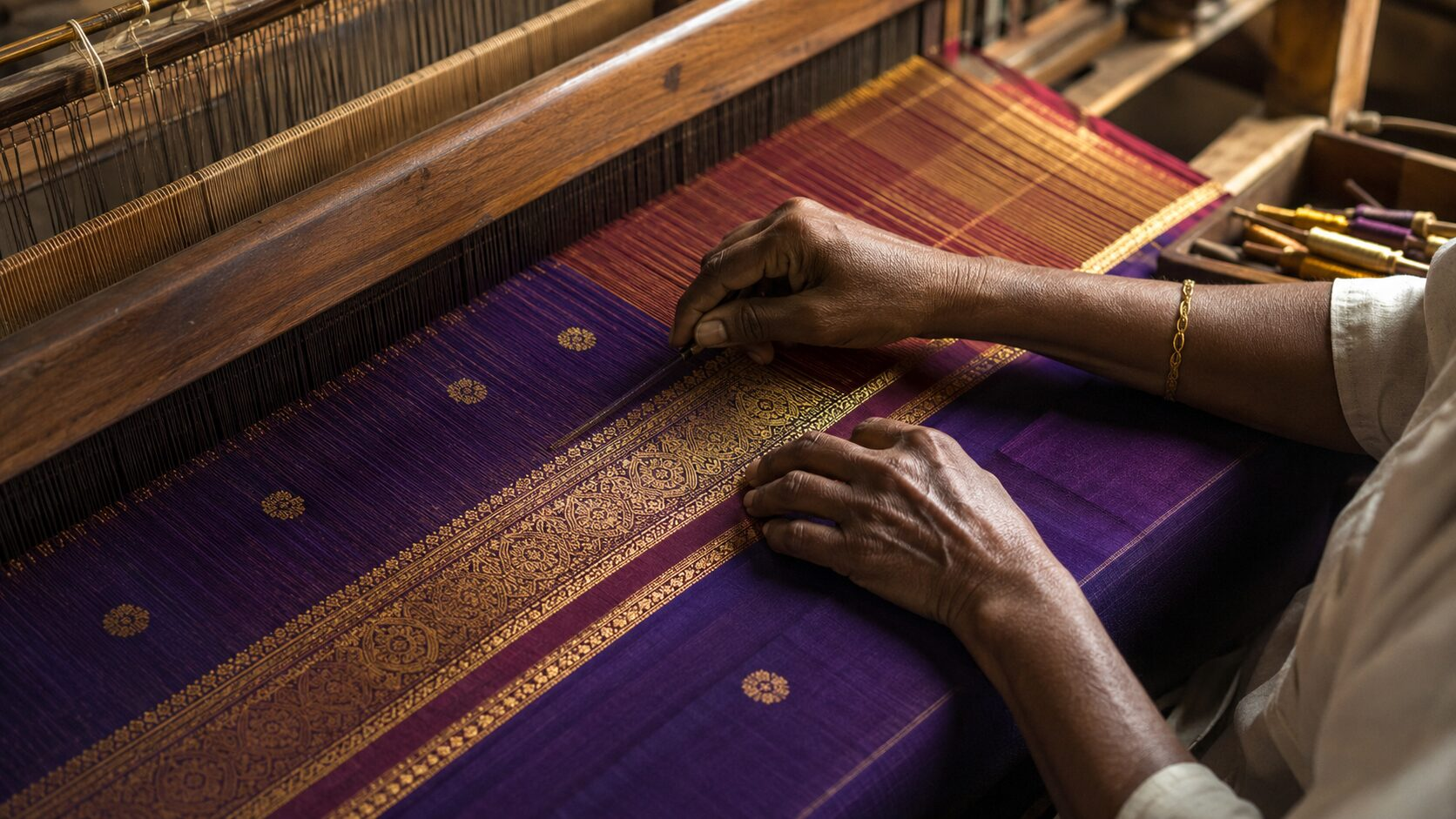
A handwoven saree is created gradually, row by row. The weaver must maintain tension, alignment, color transitions and motif placement while responding to the natural behavior of the yarn. More intricate borders, pallus and motifs demand additional time and concentration.
Small irregularities may sometimes appear. When they do not compromise the saree, they can be evidence of the human process rather than defects—subtle reminders that the textile was guided by hands, not produced as an entirely uniform industrial surface.
Designed to Endure
A Kanchipuram silk saree can remain beautiful for decades when it is stored thoughtfully, aired periodically and cleaned appropriately.
Over the years, its meaning may deepen. A saree once selected for its color may later be remembered for the person who wore it. A wedding saree may become a daughter’s inheritance. A grandmother’s silk may return at another family celebration, worn in a new way but carrying the old memories with it.
At Shanmaya, this is what we hope to honour: sarees chosen not only for the day on which they are first worn, but for all the days on which they will be remembered.
Made for Memories. Woven for Generations.